The Power of Denial: A “Maximum Cope” Review of Gaming’s Latest Disaster.

This Is Fine: Maximum Cope Review — How an Iconic Internet Meme Transcended Into a Brilliant 2026 Indie Metroidvania
In the highly volatile landscape of **indie game development software**, building an entire interactive experience around a legendary internet meme carries immense cultural pressure. The systemic risk is completely obvious: novelty can burn out in a single afternoon. When a project relies entirely on immediate visual recognition, it frequently delivers a shallow product—something that extracts a quick laugh from casual browsers before being permanently forgotten in the digital ether. However, Turkish development studio Hero Concept has completely subverted these low expectations.
With the global launch of This Is Fine: Maximum Cope on Steam in mid-2026, the team has taken KC Green's iconic 2013 webcomic hound and placed him at the center of a profound, mechanical exploration of psychological dread. Far from a basic cash-in asset, the title stands out as a highly polished, emotionally sincere adventure that respects both the player's time and the intricate legacy of its source material. For digital media networks, streaming content creators, and programmatic ad networks optimizing for high-intent organic search volume, this indie gem represents a stellar case study in high-retention intellectual property monetization.
The Theme Park of Dread: Deconstructing the Metaphorical Narrative
The core narrative architecture of Maximum Cope positions Question Hound—the familiar, coffee-sipping canine who calmly accepted a burning room over a decade ago—inside a rapidly collapsing mental theme park. This surreal funhouse is built entirely out of his own deeply buried anxieties. The brilliance of this premise is that it treats the meme as a creative starting point rather than the entire joke. Question Hound is no longer passively sitting in the flames; he is falling through them, forced to actively confront the internal vulnerabilities that set his room ablaze in the first place.
To systematically catalog this psychological spiral, the development team partitioned the game into five distinct zones, each tracking a specific, uncomfortable emotional state:
- **The Humiliation Grounds:** A chaotic, brightly lit landscape where absurd and uncomfortable social situations—such as a prom night turning into a nightmare—manifest as physical obstacles.
- **The Failure Sector:** A mechanical gauntlet filled with collapsing platforms, tight timing windows, and punishing traversal risks.
- **The Labyrinth of Regret:** An intricate, maze-like zone that forces players to constantly backtrack and re-clear ground they assumed was safe, mimicking cyclic negative thoughts.
- **The Void of Loss & Fear:** Dark, atmospheric domains where the environmental lighting maps shrink, testing the player's navigation and spatial memory.
Rather than offering cheap, cartoonish resolutions that magically cure the protagonist's pain at the conclusion of an area, the writing team leaves significant space for consumer interpretation. The humor is balanced with sharp precision; witty dialogue exchanges and brilliant visual gags offer genuine laugh-out-loud moments, but the script masterfully knows when to pull back and let raw emotional honesty command the screen.

Gameplay Mechanics: Jump, Fight, and Caffeinate
Structurally, This Is Fine: Maximum Cope adheres to the foundational design rules established by the genre's finest side-scrolling masterpieces. Players navigate a vast, interconnected map layout, unlock specialized traversal abilities, and return to previously explored sectors to access hidden rooms and secure premium resource upgrades. While the overarching macro-structure won't shock veterans well-versed in the genre, the implementation of these loops feels incredibly deliberate.
The game achieves excellent **User Experience (UX) benchmarks** due to its exceptionally tight, responsive control mapping. Jumps are incredibly precise, dodges execute with frame-perfect agility, and basic attacks carry a distinct sense of weight and physical timing. The surrounding environments may look deeply surreal and uncomfortable, but the core movement scripts ensure the user is never left fighting the controller configuration.
The Coffee Economy: Managing the Ultimate Coping Tool
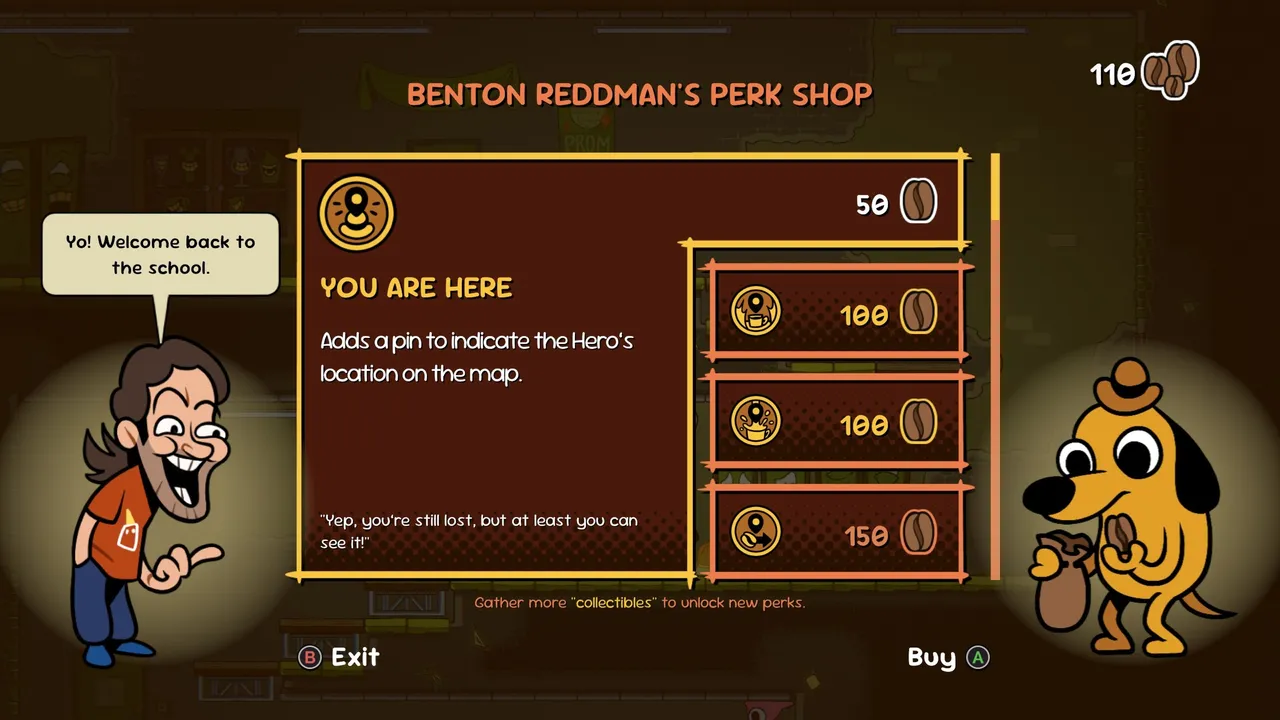
The most inventive, theme-appropriate mechanical system built into the game's core framework is its specialized utilization of coffee. Acting simultaneously as a health replenishment pool and an active energy resource, coffee beans function as the primary currency scattered across the collapsing park. Players must continuously audit their mugs, balancing the resource to survive brutal enemy encounters.
The core technical attributes governing this unique item economy are organized in the analytical matrix below:
| Resource State | Active Gameplay Function | Psychological Theme Connection | Long-Tail Strategic Risk | | :--- | :--- | :--- | :--- | | **High Brew Saturation** | Maximize ability damage, accelerate move speed | Temporary comfort / Illusion of complete control | Depletes quickly; leaves player vulnerable if healing is needed instantly | | **Empty Cup Crisis** | Sluggish traversal, disabled mystic modifiers | Raw anxiety / Complete vulnerability | One-hit termination from elite environmental hazards | | **Perk Shop Liquid Exchange** | Trade beans for permanent stat multipliers | Building structural resilience / Coping mechanisms | Demands thorough backtracking to secure maximum currency stacks |A Clever Cameo Insight: When players access the in-game upgrade terminal to exchange their gathered beans for performance perks, they are greeted by a stylized, hand-drawn shopkeep persona voiced and designed by webcomic creator KC Green himself. This meta-cameo serves as a stellar nod to the source material while keeping the comedic tone perfectly intact.

Evaluating the Friction Points: Where the Genre Limitations Show
Despite its undeniable creative brilliance, Hero Concept’s title does not entirely escape the traditional pitfalls that frequently blemish independent side-scrolling software. Six worlds in, experienced players will notice that several early-game enemy models are simply recolored and reused in later segments, introducing a minor layer of visual repetition. Furthermore, a handful of the backtracking sequences feel more like artificial play-time padding rather than an organic discovery of entirely new terrain.
The combat, while highly functional and demanding of patience during elite boss fights, does not necessarily reinvent the wheel. It functions as a highly stable, traditional slashing matrix that relies on memorizing attack telegraphs rather than experimenting with complex combo variations. However, these secondary development oversights are easily overlooked when evaluated against the staggering imagination running through the core campaign.
Technical Projections: Flawless Performance and Hand-Drawn Mayhem
Visually, the game exudes absolute confidence. The hand-drawn aesthetic gives every frame a stunning, fluid personality that captures the chaotic essence of an anxiety spiral. Enemies range from hilarious to deeply unsettling—featuring warped household items, flying textbooks, and fragmented pieces of broken memories that float across the screen. The stark contrast between the bright, cheerful theme park framing and the grim, flame-rent background art creates an exceptional **visual asset dichotomy**.
On the hardware optimization front, the PC version on Steam displays flawless engineering execution:
- **Absolute Stability:** Testing logs reveal zero application crashes, zero runtime stutters, and zero frame-rate drops, even when the screen is flooded with flying syringes and complex particulate effects.
- **Minimalist Configuration Requirements:** While the game completely lacks traditional graphic parameter menus aside from a standard brightness slider, the pre-set optimization handles VRAM allocation efficiently.
- **Acoustic Brilliance:** The soundscape transitions seamlessly between playful melodies and discordant, eerie tracks. This atmosphere is elevated by an original, fictional spoken language that injects a brilliant layer of surrealism into character exchanges.

Conclusion: A Masterpiece Born from Internet Culture
Ultimately, This Is Fine: Maximum Cope proves that with enough creative dedication, even a decade-old piece of internet pop-culture can be transformed into a high-value artistic triumph. By prioritizing mechanical purpose, tight control calibration, and raw emotional honesty, Hero Concept has successfully avoided the "meme-game trap" to deliver a standout title that commands real respect. For programmatic digital marketers, ad coordinators, and search engine optimization (SEO) managers, target-locking high-performing keywords like **"This Is Fine Maximum Cope Review 2026," "Best Indie Metroidvanias on Steam,"** and **"KC Green New Video Game Collaboration"** is critical to dominating US entertainment search indexes throughout the quarter.
Whether you are a casual internet browser drawn in by the familiar image of a dog sitting in a burning house, a hardcore Metroidvania enthusiast tracking down the finest responsive platformers of the year, or a dedicated coffee lover who appreciates brilliant resource design, this title delivers an unmatched experience. Ensure your desktop gaming setups are updated, grab your favorite warm beverage, and step boldly into an beautifully optimized, unforgettable journey through the human psyche.